
Showing posts with label guest blogger. Show all posts

Friday, July 23, 2010

While I'm Away...Guest Blogger Deb Raney

Terrible, Horrible, No Good, Very Bad Reviews

by Deborah Raney

One of the hard things a published writer must learn is to toughen up where reviews are concerned. I hate bad reviews, whether from professional critics or ordinary readers on amazon.com. I especially hate them when they aren’t as much about the book, as they are about demeaning an author’s beliefs, religion, ethnicity, or personality. But bad reviews are a fact of the writing life, and there aren’t many multi-published authors who haven’t had at least one or two.

I’ll never forget my first scathing reader review (for Beneath a Southern Sky...and it’s still up on amazon.com if you want to weep along with me! LOL!) That review almost paralyzed me for a few days. It truly did. It didn’t hurt so much that someone didn’t like my book (okay HATED my book). I’m well aware that the type of book I write isn’t for everyone, and there are many different tastes in genre and style. What hurt was that it sounded like the reviewer didn’t much like me as a person either!

When I go back and read that review now, I can be much more objective. I realize now that the reviewer probably has never met me. I don’t think he/she really meant their words as a personal affront. But I can also still, after more than four years, remember the deep pain I experienced when I first discovered that review. I actually broke out in a sweat and started shaking—and I’m not usually an excitable person. I shed some tears over that person’s words, and I have a feeling he/she would be surprised to know that.

But I did something else after receiving that review. I removed an amazon.com review I had written months earlier for a book that really made me angry. No, it wasn’t wrong of me to post a review respectfully outlining why I disliked this book. But I had made the same mistake I think my reviewer made—I made my review personal, commenting on the author’s personality, not just his writing. I didn’t even know the man! But like my reviewer, I failed to acknowledge that this author was human and had feelings.

My terrible-horrible-no-good-very-bad review (and there have been plenty of others since) gave me two important things: a thicker skin for the inevitable bad reviews to come in my future; and a softer heart for other writers, who are real people just like me.

_________________________________________
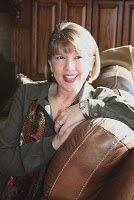

DEBORAH RANEY is at work on her nineteenth novel. Her books have won the RITA Award, HOLT Medallion, National Readers' Choice Award, Silver Angel, and have twice been Christy Award finalists. Her first novel, A Vow to Cherish, inspired the highly acclaimed World Wide Pictures film of the same title. Her newest books, the Clayburn Novels, are from Howard/Simon & Schuster. She and her husband, Ken Raney, have four children and enjoy small- town life in Kansas.

Visit Deb online at: www.deborahraney.com

Thursday, July 22, 2010

While I'm Away...Guest Blogger Max Elliott Anderson

Thanks to today's Guest Blogger, Max Elliott Anderson! Max is also represented by Terry Burns, of Hartline, and has several books for young boys published. Max has generously provided this recent interview with the illustrator for his latest book, so you can see how things work in another area of publishing. Pretty cool stuff!

Max says:

So much attention is given to the author, when a new book is released. However, many times it's the cover that draws in potential readers, or turns them away.


Following is an interview with Holly Heisey, the artist and illustrator for my (Max's) new book, Lost Island Smugglers, which will be released on August 1st.


MAX: It’s often said, “Don’t judge a book by its cover.” However, in this case, I hope people will be drawn to the cover of my new book. Explain your initial thoughts as you approached this project.


HOLLY: I've always been drawn to vibrant covers that seem to come alive with the story. That's what I wanted to do for Lost Island Smugglers--give the readers a slice of the action so they'd have to know more.

MAX: writer sees images and words in his head. When you approach an art project for the first time, what are some of the elements that you see, before you begin painting or drawing?


HOLLY: This depends on if the drawing is from my imagination, or based on a story I've written or read. If it's from imagination, I'll often sit down and either start randomly doodling with a pen or painting bold colors until shapes start to emerge and I have an idea of what the drawing could be. Art from stories is a little different. When I'm reading, a concrete image in the words will jump out at me, and I'll scribble down a very loose sketch. I rarely deviate far from my original "flash image." If it's strong enough for me to see in living color, it's strong enough to paint.


MAX: Explain the different steps you took in producing the cover art for Lost Island Smugglers.


HOLLY: I knew the cover for Lost Island Smugglers should be centered around the storm, which was the most exciting and action-packed part of the story, so when I read the manuscript, I paid close attention to the details to find just the right image to start with. Once I got my image and scribbled it down, I went on the web and found dozens of pictures of catamarans, storms, wavy seas, stormy skies--anything and everything that would help me make the painting as realistic as possible. Then, with my reference in hand, I scanned my original tiny sketch into the computer, blew it up to the size of a cover in Photoshop, and started to digitally paint over it with shapes and forms in shades of gray. It helps to start with gray so I can get the lighting right without having to worry about the color. Once I had a good idea of what it would look like in gray, I started painting over it in color. Like a writer has first, second, and third drafts and so on, every time I went over the painting again, I tightened the shapes, put in more details, made everything more accurate. Finally, I adjusted all the colors in Photoshop and put the finished painting into the design for the book cover.

MAX: Authors talk about facing writer’s block, where it seems impossible to go forward with a writing project at times. Does an artist ever experience this sort of creative block? And if so, how do they get past it?


HOLLY: A lot of artists are very much like writers in that they are visual storytellers. If I can't find the right story to tell with my art, I will get blocked. A lot of times I get past this by looking at paintings by artists I love. It's so inspiring and freeing just to appreciate art at its best that it often gives me the idea I need to keep going. Good books and movies will do that, too. It's all a big creative melting pot!


MAX: What would you say was your biggest challenge in creating the artwork for this book cover?


HOLLY: My biggest challenge for this cover was painting the waves. I've never been out on the sea and certainly not in a storm, so I had to pour over many paintings and photos of waves in storms until I got my painting to just where I liked it.


MAX: You also did some pen-in-ink illustrations for the interior of the book. Could you talk about those, how you approached each subject, and any other details that readers might find interesting?


HOLLY: I don't know if there's any I'd say I'm most proud of. I learn so much with each painting that they're all special to me in some way. I can look at my paintings and say, "Here's where I lerned how to handle textures," or "Here's where I learned how to paint with colored pencils." In that sense, every piece of work is a badge of accomplishment to me. I can say about the Lost Island Smugglers painting, "Here's where I learned how to paint the sea!"

MAX: What are your hopes and dreams for your art in the future?

HOLLY: I really love telling stories with my art. I hope to hone my skills enough to do illustrations for the top science fiction and fantasy books and magazines. I'd also love to do concept art for movies--that would be just amazing.

MAX: Many people what to know how they can break into the writing and publishing field. How would you advise young people who are interested in a career in art?

HOLLY: The first step in anything creative is just lots of practice. Lots of doing it and finding things out as you go. Look all over the internet--sites like deviantart.com and conceptart.org are a great place to start--and find what kind of art you really like, and then study the paintings to find out how the artists did it. Study the lives of artists and how their lives influenced their work. Take art courses online and buy art books and look at everything, study everything, and draw. You will never regret honing your drawing skills, and they will always serve you, again and again. And while you're at all this, plug into groups of area artists and online forums like deviantart.com, conceptart.org, cghub.com, and cgsociety.org where you can get and give feedback from other artists and gain contacts in the industry while you go. You don't have to go to an expensive art school to succeed in the art industry, you just need a passion to grow in your art and a constantly improving portfolio.

MAX: Please list the links where people can learn more about you.

HOLLY: My personal website is: http://hollyheisey.com

My portfolio is at: http://hollyheisey.carbonmade.com

And you can follow updates on my art on my Facebook fan page at: http://www.facebook.com/pages/manage/#!/pages/Holly-Heisey-Artist/119051711443606

MAX: Is there anything else you’d like to share?


HOLLY: Thanks, Max, for having me on your blog. I had a blast and learned a lot while doing the illustrations for Lost Island Smugglers, and I hope they enrich the book and make it as much fun to read as I had fun doing it!

Port Younder Press on Youtube:

http://www.youtube.com/watch?v=QvQHzgpmKBY


_____________________________________________


Mr. Anderson was a producer of the nationally televised PBS special, Gospel at the Symphony that was nominated for an Emmy, and won a Grammy for the double album soundtrack. He won a best cinematographer award for the film, Pilgrim's Progress, which was the first feature film in which Liam Neeson had a staring role. He has produced, directed, or shot over 500 national television commercials for True Value Hardware Stores. Mr. Anderson owns The Market Place, a client-based video production company for medical and industrial clients. His productions have taken him all over the world including India, New Guinea, Europe, Canada, and across the United States.

Using his extensive experience in the production of motion pictures, videos, and television commercials, Mr. Anderson brings the same visual excitement and heart-pounding action to his stories. Each book has completely different characters, setting, and plot.

Seven books are published, with an additional twenty-eight manuscripts completed. Young readers have reported that reading one of Mr. Anderson's books is like being in an exciting or scary movie.

Author Web Site: www.maxbooks.9k.com

Books for Boys Blog: booksandboys.blogspot.com

Mr. Anderson is listed in WHO'S WHO in Finance and Industry, Entertainment, Advertising, The Midwest, Emerging Leaders in America, The World, and WHO'S WHO In America (1999 - present)


Wednesday, July 21, 2010

While I'm Away...Guest Blogger Margaret Brownley

Where do you get your Ideas?
by Margaret Brownley


Look around. See them? I’m talking about ideas. They may be invisible to the naked eye but they’re everywhere. They’re in the air you breathe, the sights you see, and sounds you hear. They lurk in the shower and, if you’re lucky, in your sleep. They can even pop out of nowhere.


Ideas are probably the most numerous things on earth. Yet I’m constantly asked where I get the ideas for my books. As any writer will tell you an idea is nothing more than a tiny seed. Once you have this seed in hand you must then go after your story, sometimes with a sledgehammer. That’s what Rod Serling called the bleeding part.


Most writers I know read everything—even tubes of toothpaste. Books, magazines, movies and music are chock full of precious nuggets waiting to be turned into new stories. If all else fails we even eavesdrop. My friends have been warned to watch what they say or do in front of me or they may end up in a story.


The idea for a Lady Like Sarah, the first book in my Rocky Creek series, came from an article about Pearl Hart who robbed a stagecoach to pay for her mother’s medical expenses. (Bet you didn’t know that medical expenses were highway robbery even back in the 1800s.) Reading about that lady outlaw provided a seed but that’s all it did. Still 80,000 words short of a book, I went to work by asking questions (that’s the sledgehammer part). How desperate must a woman be to rob a stage? What if she got caught? What would happen if…. I was just about to run out of “what ifs” when a woman named Sarah (no last name) jumped up in front of me and demanded to have her story told.


The idea for my September 2010 release A Suitor for Jenny lurked in a dusty Kansas museum. While rifling through old newspaper clippings I came across a meeting notice for “The Society For the Protection and Preservation of Male Independence.” Talk about “aha” moments. From that clipping came the idea to have my heroine Jenny Higgins breeze into a town of confirmed bachelors looking for husbands for her two sisters. Fireworks, anyone? (I also found a meeting notice for the “Society for the Prevention of People Being Buried Alive” but needless to say that failed to pass the “aha” test.)


Book 3 of my Rocky Creek series A Vision For Lucy was inspired by photographer Julia Shannon of San Francisco, who, in 1850, took the family portrait to new heights when she shockingly advertised herself as a daguerreotypist and midwife. Her old newspaper advertisement sparked the inspiration for my heroine Lucy Fairbanks, who owns the only camera in town. Anything can happen when posing for Lucy—but you’ll have to wait until June 2011 to find out what does.


A story in the National Enquirer about Avon ladies selling to Amazon natives inspired an older historical novel of mine, Touch of Lace. While running around with a sledgehammer I looked up Avon and discovered that the first Avon “lady” was a door-to-door book salesman. He gave out perfume hoping to entice women to buy his books, but the perfume proved more popular. Not only did this give me a great idea for a story but some good advice about what not to give away when promoting a book.


Like I said, ideas are everywhere. Though I’ve yet to have an “aha” moment while staring at the toothpaste.

_________________________________________________________


Author of more than 20 books, Margaret Brownley's books have been published in 15 languages. A Lady Like Sarah is a finalist for the Romance Writers of America RITA award. You can reach her through her website: www.margaretbrownley.com. She's also a resident blogger:www.petticoatsandpistols.com


Tuesday, July 20, 2010

While I'm Away...Guest Blogger Sandra Ardoin

A Change in Character

by Sandra Ardoin

Are you the same person you were ten years ago? Five years? Two? Six months? Our experiences alter us—sometimes boldly, most times subtlely. As in real life, a fictional character must change in some way from the person he was on page one to the person he becomes by page three hundred or so.

For a writer, this means knowing your hero and heroine’s histories. What baggage do they carry into the story? What goals have been born out of their experiences? What warts have they developed along the way? And how can you use that background information to advance the plot of your story?

Consider the book Eragon by Christopher Paolini. In the beginning, Eragon is a poor boy living with his uncle and cousin, eaking out an existence on the outskirts of a small village, a hunter and farmer. By the end of the book, circumstances take him to places he’s never been and turn him into a warrior fighting to free his people from an evil ruler. That’s a bold change. But he also experiences more subtle growth. He starts out cocky and sure of himself, seeking revenge and expecting to find it. By the end of the book, his losses have helped to mature him. He’s a young man seeking the advice of those who are wiser. He has a lot to learn before he can become the Dragon Rider he was meant to be—the one his people need if they are to survive. All of which leads to the second and third books, Eldest and Brisingr.*

In an inspirational novel, transformation generally comes about as the character’s faith grows and he begins to see things from God’s perspective rather than his own or someone else’s.

It’s a gradual process throughout the book. If not, if the character has a sudden, drastic change of heart, we just don’t believe it. Recently, one of my critique partners felt the personality of a character in my story had changed too dramatically in too short a time. So during the rewrite, I will be looking closely at scenes involving this character, and how I can slow the pace of his turnaround.

Does a particular book stand out in your mind in which the main character has undergone a dramatic alteration from the beginning to the end? Did it seem natural, or did you doubt the character would change that much or that quickly?

*Originally called the Inheritance Trilogy, Mr. Paolini decided Eragon’s story needed a fourth book so the series now has the title Inheritance Cycle. Book Four is due out some time this year. See, when it comes to fiction, anything can change!

________________________________________________________

In her career, Sandra Ardoin has been blessed to have published various forms of inspirational writing.

She will never forget her first writing sale over twenty years ago—an inspirational poster quote. She’s sold numerous others, most for educational purposes, including one that appeared on a tee shirt and another in a movie. At one time, you may have sent someone a greeting card with one of her sentiments.

She’s written devotions for adults and children. And her light verse has appeared in The Saturday Evening Post, Cappers, and shows up occasionally on the Cracker Barrel page of Mature Living.

But fiction has always been the heart of Sandra’s writing. Her short stories have appeared in both adult and juvenile denominational publications. In 2000, Keys for Kids used four of her children’s devotions for The One Year Book of Devotions for Girls and The One Year Book of Devotions for Boys (published by Tyndale House).

Pauline Books and Media chose her short story, “Get A Clue,” as part of their Family Ties short story collection released in the spring of 2010.

She joined American Christian Fiction Writers to keep up with vital information regarding the craft and business of her profession, along with enjoying the fellowship of other inspirational writers. The resource group, 19th Century Writers, helps her keep the details in her historicals accurate.

She’s a Hoosier by birth and a southerner through God’s plan. Sandra and her family live in the southeast in a town whose role in Civil War history just might end up as the framework for a future novel.

Visit Sandra online at: www.sandraardoin.wordpress.com

Monday, July 19, 2010

While I'm Away...Guest Blogger Nikki Arana

Well, this week, I'm going to attempt to take some sort of minor vacation. Not that I won't be working at all, but I'm trying to lessen the load a bit. One way I'm doing that is having guest bloggers all week. Basically, instead of having to think of something to blog about three times this week, others will do it for me. Which is really cool for you because you'll get to meet some wonderful authors who have incredible information and knowledge they're eager to share with you.

Another bonus is that I'm scheduling five posts this instead of just three, so you'll be able to enjoy even more good stuff. So look for an entry every day this week (Mon-Fri).

Thanks to these five awesome authors who stepped up and offered their assistance so I can take a (much needed) break.

So sit back and enjoy this first guest.


Nikki Arana is an award-winning author of women's fiction, essays, poetry, and magazine articles whose work has been published in the United States and Canada . She has won several national awards, including the American Christian Fiction Book of the Year for Women's Fiction for two consecutive years, the Beacon Award, the Excellence in Media Silver Angel Award, the Write Touch Readers Award, and others. Her book, The Winds of Sonoma was named One of the Top 20 Books of the Year by Christianbook.com. Her 5th, and first non-fiction book, Through the Eyes of Christ: How to Lead Muslims into the Kindom of God, has just been released. She is currently under contract with Cook Publishing. You can learn more about her at www.nikkiarana.com.

People are always surprised to learn that I have sold everything I ever sent out. From that first magazine article to my first novel. Yes, God was blessing my socks off and assuring me that He had called me to write. At least that's what I thought . . . until 2007 when I began to write my fifth novel, The Shadow of Death.

The economy had begun a downward spiral, CBA was looking to broaden their appeal by moving toward fiction written from a Christian worldview rather the message fiction I was known for, and the subject of my book was evangelizing Muslims. There's a dicey topic to promote on a national stage! Though my previous books had won many awards, suddenly sales were not so stellar, and my once rising star seemed to dim. My agent couldn't sell my manuscript. In some cases, publishers offered a contract if I would write something else. But I knew the Lord had called me to write about the need for safe houses for Muslims in America who convert to Christianity. Many of you reading this know what I mean. God has given you a story and a passion to write it. But nothing is coming together. At every turn a door closes. You wonder if you are called to write.

It has been three years since I began writing The Shadow of Death. Offers have not come together, I've rewritten the book three times, I've fought writers block, and yes, even despair. Always coming back to the one thing that could sustain me if only I was sure-was I truly called to write. Finally, through prayer and a willingness to be broken, the Lord led me to the truth.

I am not called to write. I am called to intimacy with Him. It is about letting your dreams die and being willing to live out His dreams for you. It is about spiritual growth that has nothing to do with the writing itself. It has to do with the journey. It has to do with sanctification, being set apart for His purposes, realizing that you are not meant to serve God, you are meant for God to serve man through you. I no longer wonder if He has called me to write. I know He hasn't. He hasn't called me to do anything in my own strength. He has called me to intimacy with Him. Everything else is just the fruit of that relationship. It was the dawning of this life-giving truth that finally assured me about my writing, about God, His purpose, and His timing.

Surrender and seek Him. He will do the very thing that you think tests the limits of His power.

The Shadow of Death sold a few months ago. . . . in a two book deal.


Check out Nikk's current release:

Friday, June 4, 2010

Beginning Your Novel

We have a special treat today! Please welcome guest blogger, Cathy Bryant, an author whose debut novel, Texas Roads, is now available. Be sure to check out her blog, WordVessel and enter her awesome SUMMER SPLASH contest where you can win a $100 VISA gift card!

Now enjoy this article on the 7 necessary elements of the beginning of your novel.


7 Reasons Why Your Novel's Beginning Is So Critical

by Cathy Bryant, (c) 2009

The first few pages of any novel are critical. How many novels have you started only to give up after a few pages? Here are seven must-haves for the beginning of your story:

1. Story Problem/Question

Every story has to have one. If your story doesn't have a problem or question, then what are you writing about? Why should the reader want to turn the page to find out what happens next?

2. Character's Desire

In order for the reader to connect with the main character, they have to understand what he/she wants. And ideally, the character's goal should make sense to the reader.

3. Hook the Reader

I can usually tell if I'm going to like a book within the first few pages. Sometimes when I force myself to keep reading, I'm finally able to be drawn into the story. But most of the time it never happens. The books I can't put down are the ones that capture me from word one.

4. Connect the Reader with the Main Character

For me, this is closely related with the character's desire. When I can connect with the character via an understandable desire, I'm hooked. But it also involves more. Is the character likable? If he/she's not likable, is there a good reason why? Do I care about the character--sympathize with him/her? Do I enjoy the character's personality? Is there something about him/her I can relate to?

This was one of the most difficult things for me in writing my own novel. The author walks a fine line between leaving room for the main character to grow by showing their faults/issues and making them likable enough for the reader to connect with. There is very little wiggle room between a self-pitying, whiny heroine, and a heroine who has experienced tragedy after tragedy and is having difficulty getting past it.

5. Set the Tone of the Book

This was difficult for me as well. I wanted to show my main character as someone who had faced a lot of challenges, but also wanted the tone of the novel to fun, zippy, humorous and romantic. Very tall order, but not impossible. You should know what kind of tone to set from the very beginning or you'll end up with a mishmash that confuses the reader.

6. Establish the Story World

Helping the reader visualize where the story is taking place is crucial. When the stage is set for the reader, it lends an air of credibility to the story--makes it more real and lifelike. This is true whether you're writing romance or science fiction. Without setting, the characters float around with nothing to connect them to reality. Use the five senses to help your fictional world come to life.

7. Establish the Conflict

Every novel needs conflict. Donald Maass, author of Writing The Breakout Novel, says you need it on every page. Without it, the story is flat and boring. The conflict should be both internal and external.

Check the first chapter of your work in progress. Does it have these seven components? If so, you're on your way to a great story. If not, try to add them in and see how much your story improves.
_________________________________________________________


A Texas gal since birth, Cathy lives in a century-old farmhouse with her husband and a phobia-ridden cat. Her debut novel, TEXAS ROADS, was a 2009 ACFW Genesis finalist and tells the story of a disillusioned widow's quest to find home. The book is available through Amazon.com. For more information, visit www.CatBryant.com.